
The Toyota Hiace ambulance interior specifications are a perfect example of how thoughtful design and robust engineering come together to create a safe, functional, and comfortable environment for both patients and paramedics. In this guide, we’ll explore the interior layout, materials, equipment integration, and safety features that make the Toyota Hiace ambulance a trusted choice worldwide.
1. Interior Layout and Dimensions
The Toyota Hiace ambulance interior is usually based on the long wheelbase (LWB) or super long wheelbase (SLWB) variant. This ensures enough room for a full-size stretcher, medical staff seating, and equipment storage.
- Interior Length: Approximately 3,200–3,400 mm (depending on conversion type).
- Interior Width: Around 1,650 mm.
- Interior Height: 1,350–1,600 mm, with high-roof options for increased standing room.
- Layout Style: Central stretcher bay with storage units and seating along the walls.
This spacious interior design allows attendants to move freely during patient care — a key point in many Toyota Hiace ambulance layout designs.
2. Flooring and Wall Construction
Ambulance interiors must be hygienic, durable, and easy to sanitize.
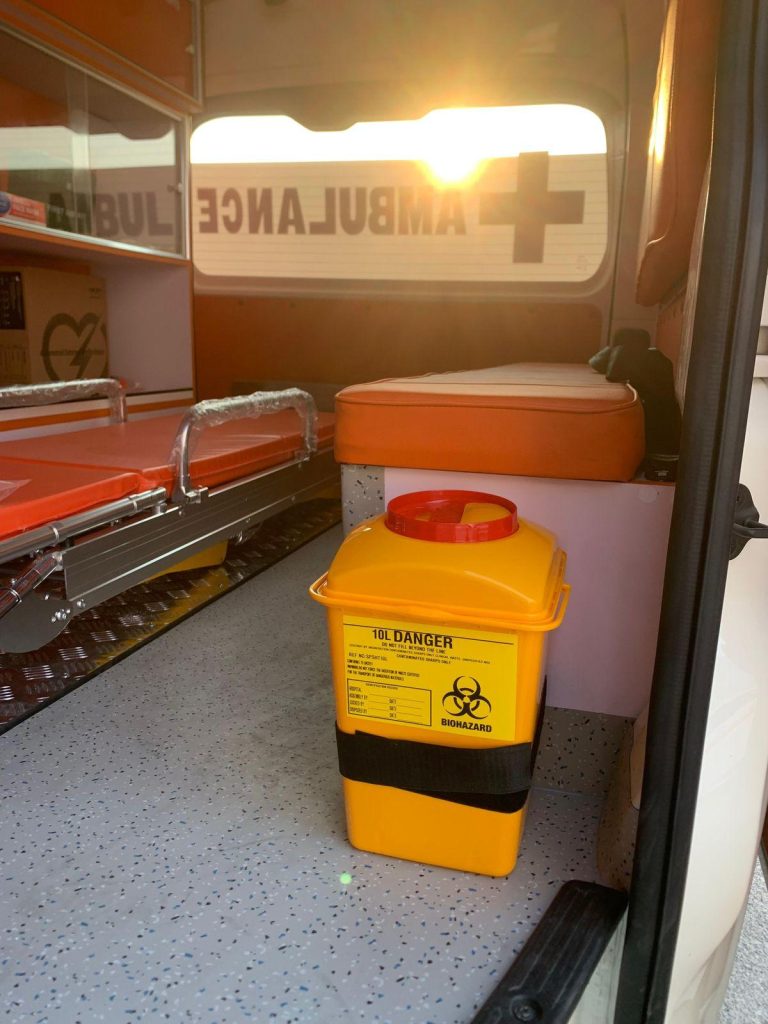
- Flooring: Heavy-duty, non-slip vinyl or polyurethane flooring with coved edges.
- Wall Panels: High-impact ABS or fiberglass-reinforced plastic (FRP).
- Insulation: Thermal and acoustic insulation behind the paneling.
These choices ensure that the Toyota Hiace ambulance design can withstand constant cleaning and the rigors of emergency service.
3. Stretcher and Patient Handling Systems
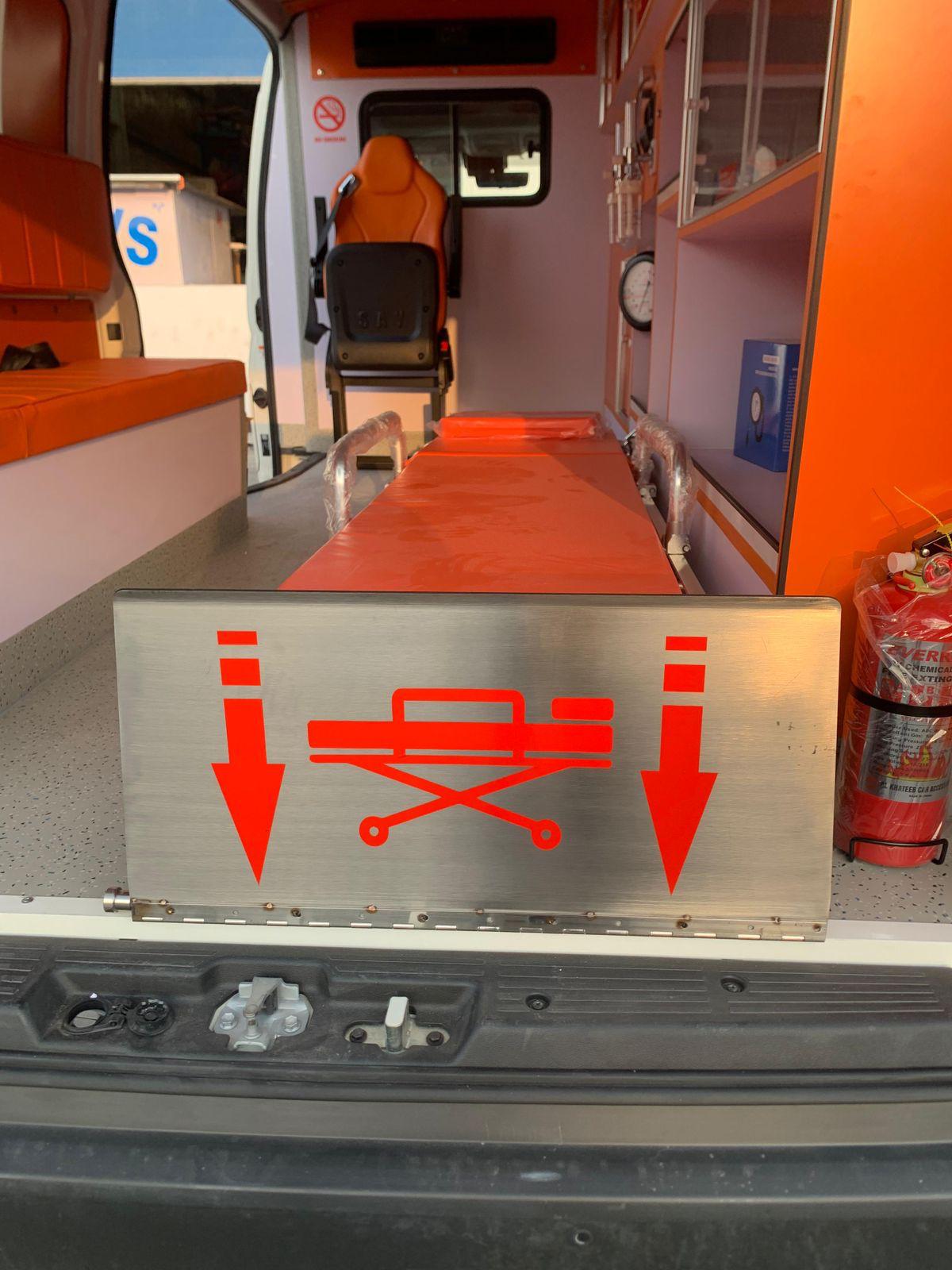
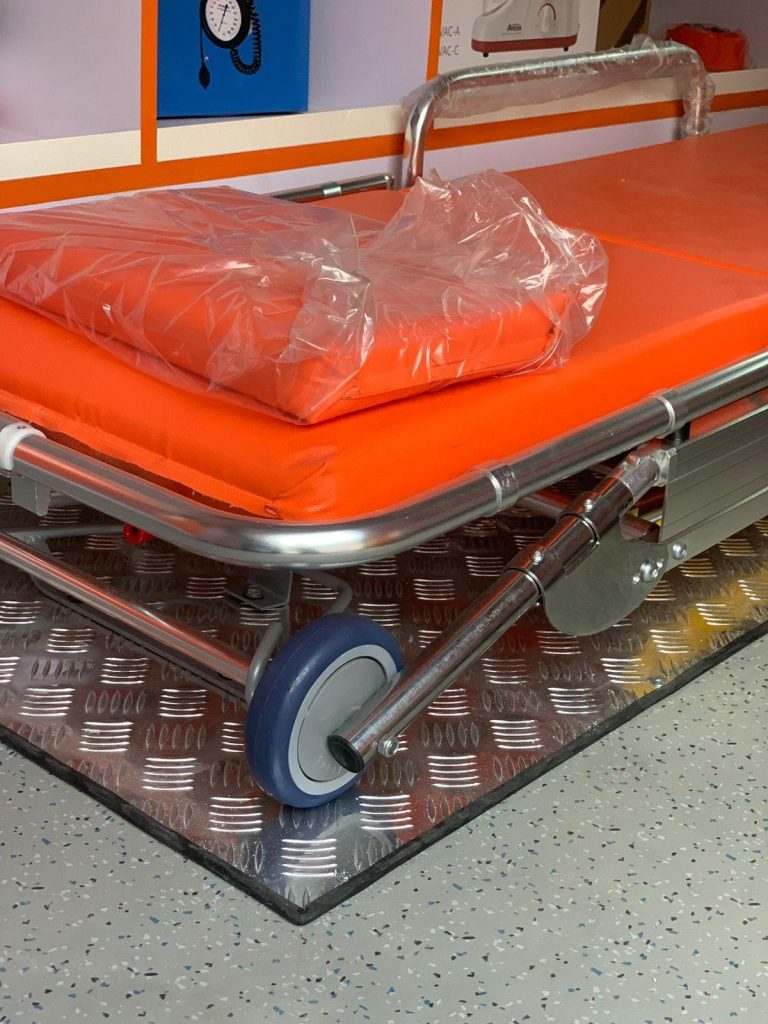
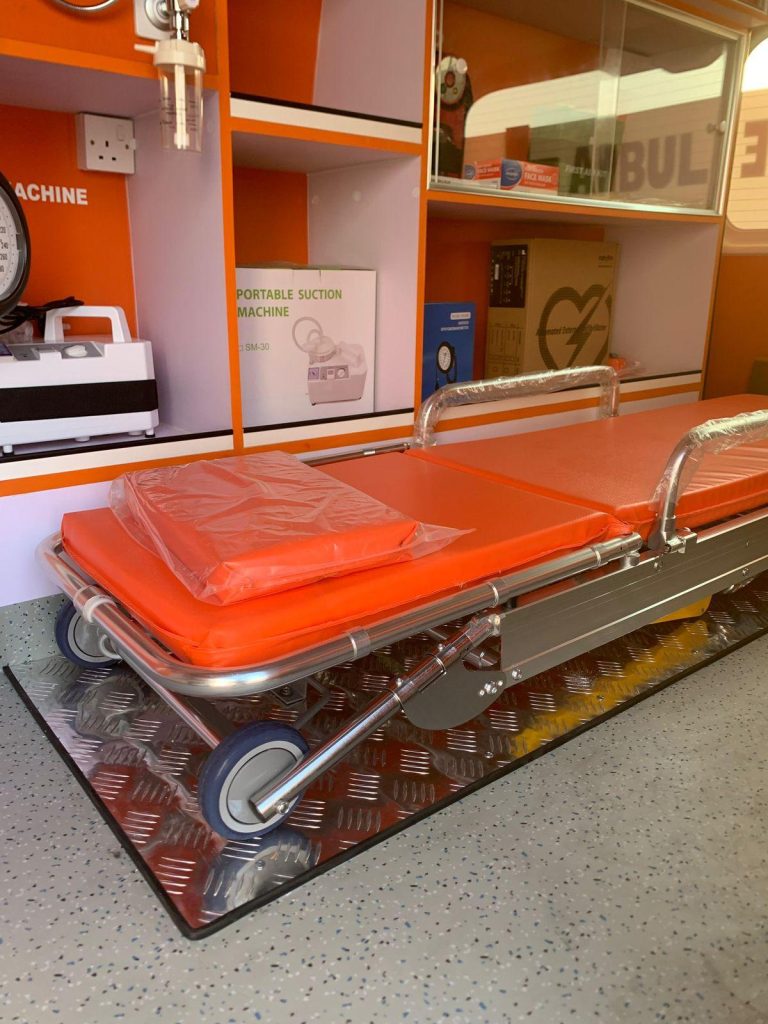
The stretcher area is the core of any ambulance interior.
- Stretcher Base: ISO 10542 compliant for patient safety.
- Locking Mechanism: Manual or automatic to keep the stretcher secure.
- Loading Height: Typically between 600–700 mm for ergonomic handling.
Many Toyota Hiace ambulance conversions also include hydraulic or powered stretcher lift systems for ease of use.
4. Seating Configuration
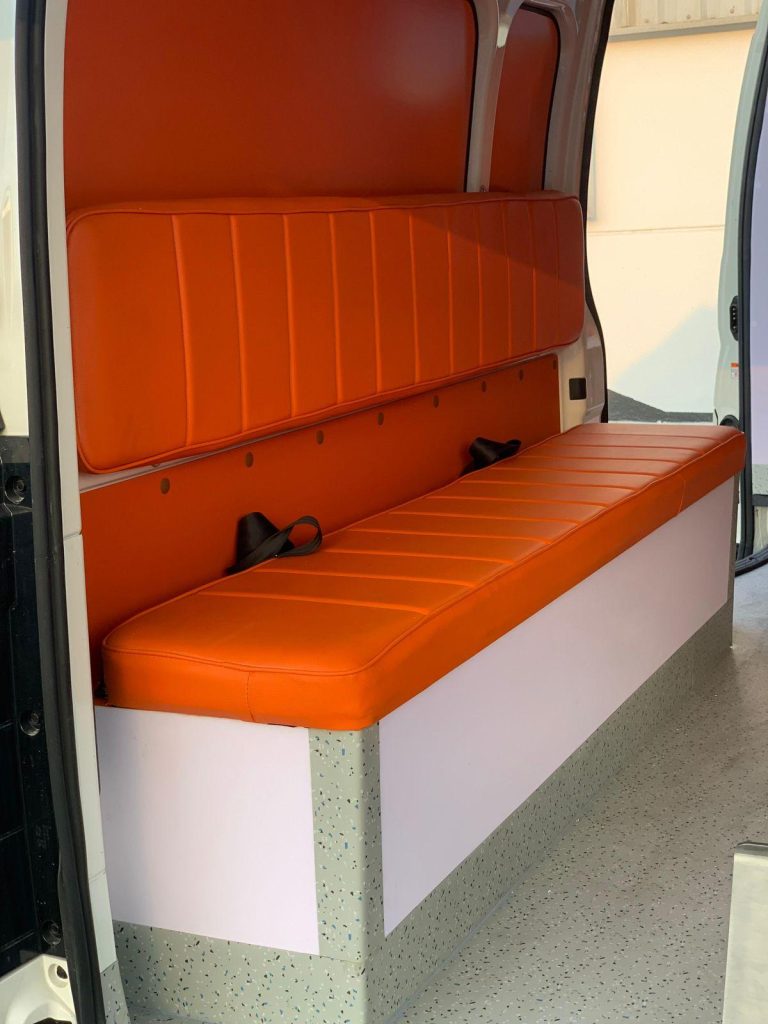
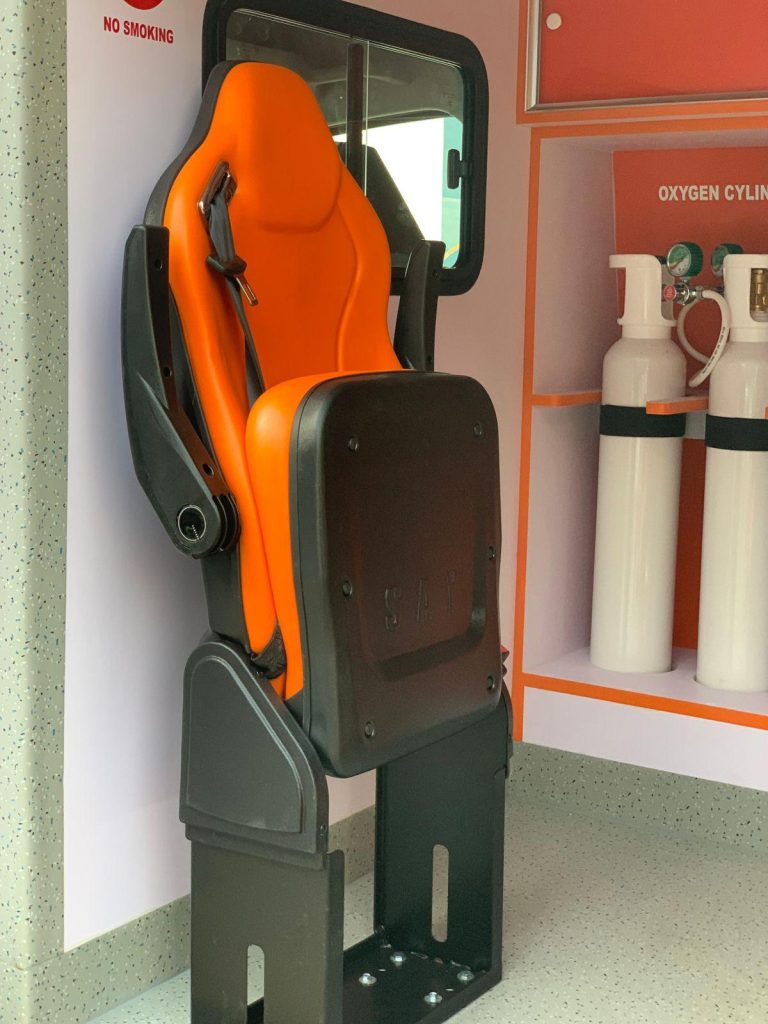
For maximum functionality, the Toyota Hiace ambulance interior typically accommodates 2–4 attendants in addition to the driver and front passenger.
- Attendant Seats: Swiveling, foldable, with lap and shoulder restraints.
- Positioning: Along the side or rear wall for quick equipment access.
- Material: Medical-grade vinyl for easy disinfection.
5. Medical Equipment Integration
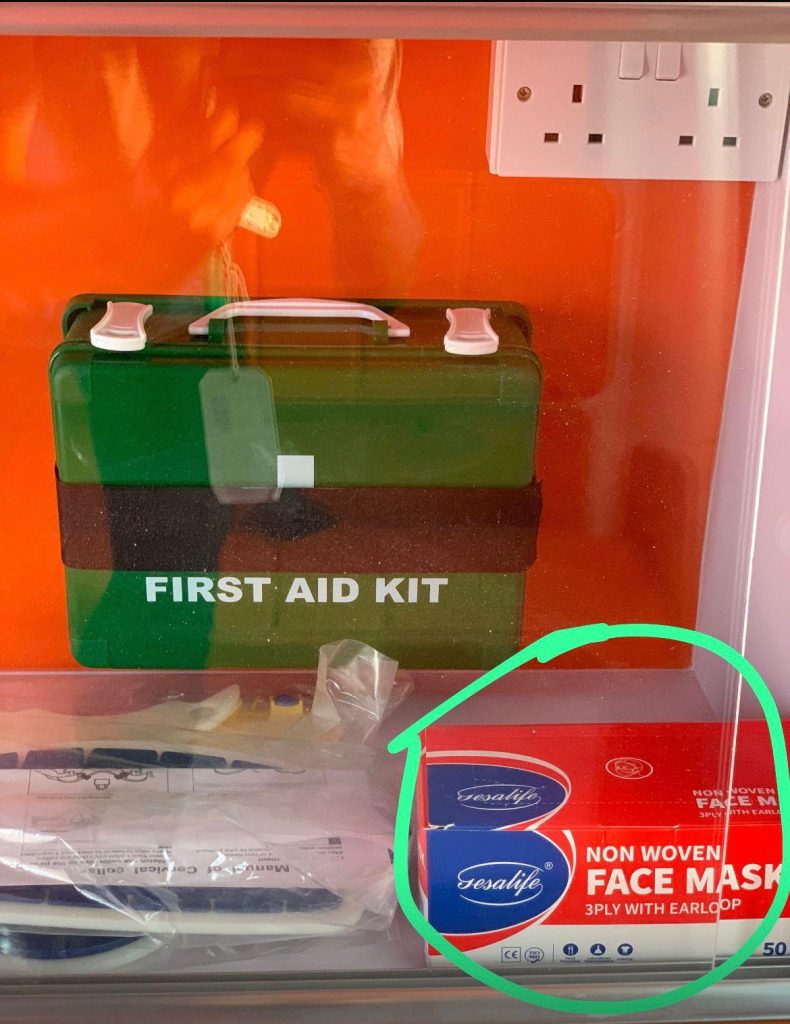
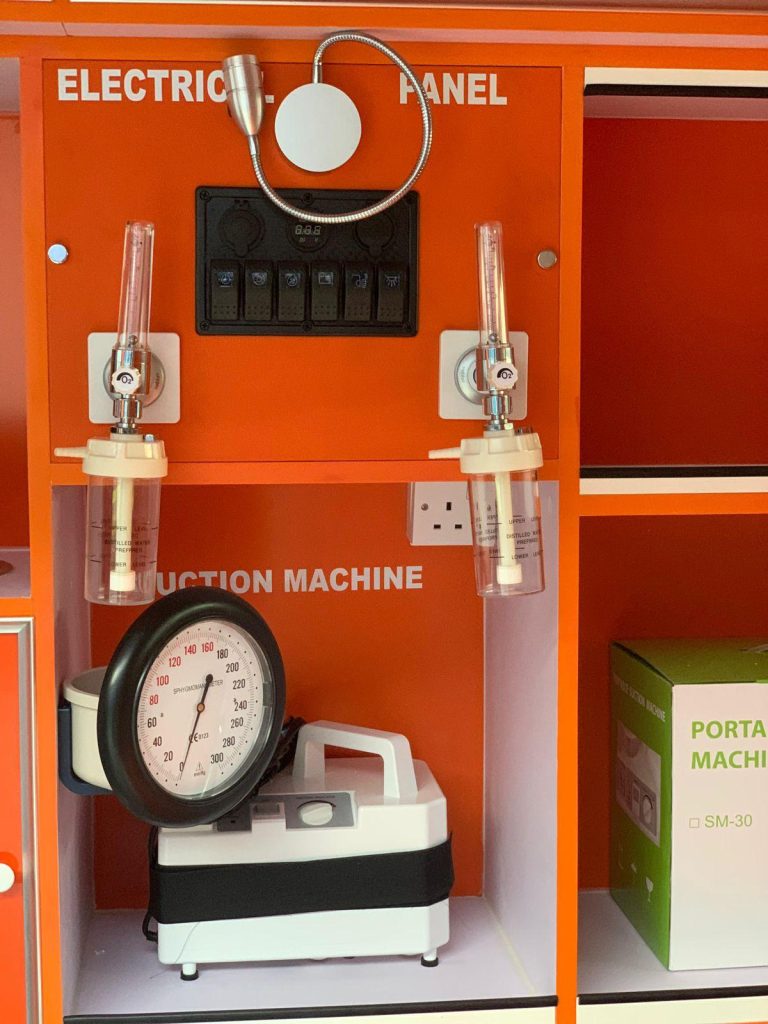
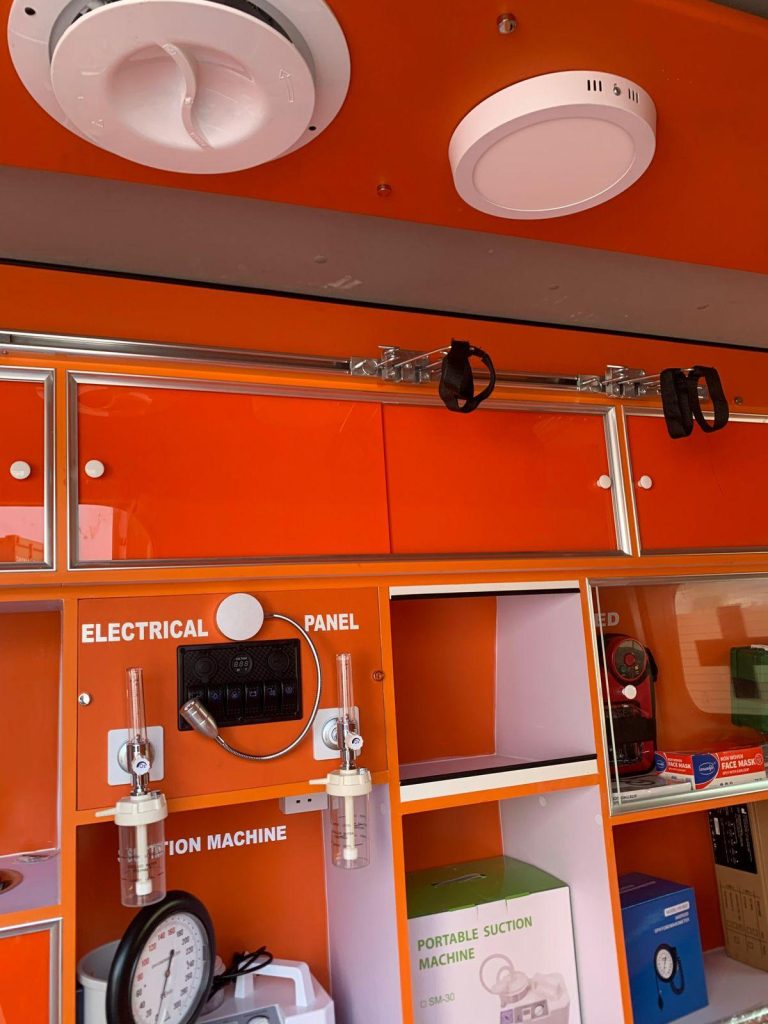
A defining feature of the Toyota Hiace ambulance interior specifications is its built-in equipment mounting and storage.
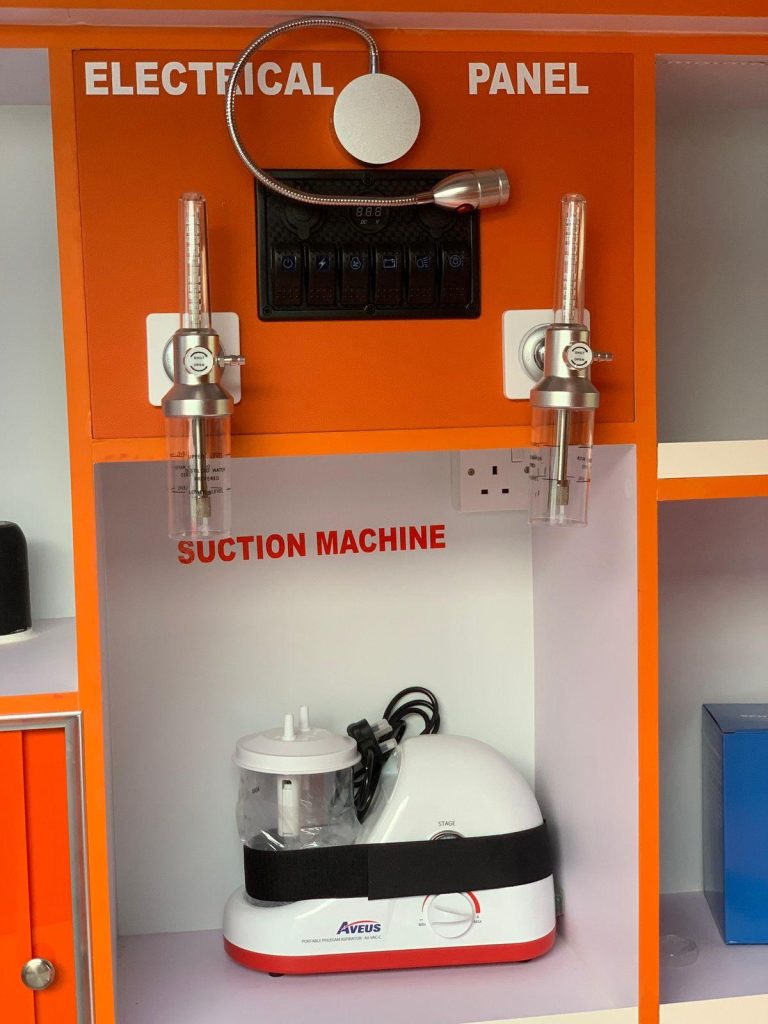
- Oxygen Supply System: Cylinders mounted securely with piped outlets near the stretcher.
- Defibrillator Mounts: Quick-access positions to reduce response time.
- Suction Unit: Wall-mounted, electric or manual.
- Infusion Stand: Retractable IV pole for fluid administration during transit.
6. Electrical and Power Management
The Toyota Hiace ambulance features a dual electrical system:
- Primary System: Powered by the vehicle’s 12V battery and alternator.
- Secondary (Auxiliary) Battery: Deep-cycle battery for medical devices.
- Inverter: Converts 12V DC to 220V or 110V AC for hospital-grade equipment.
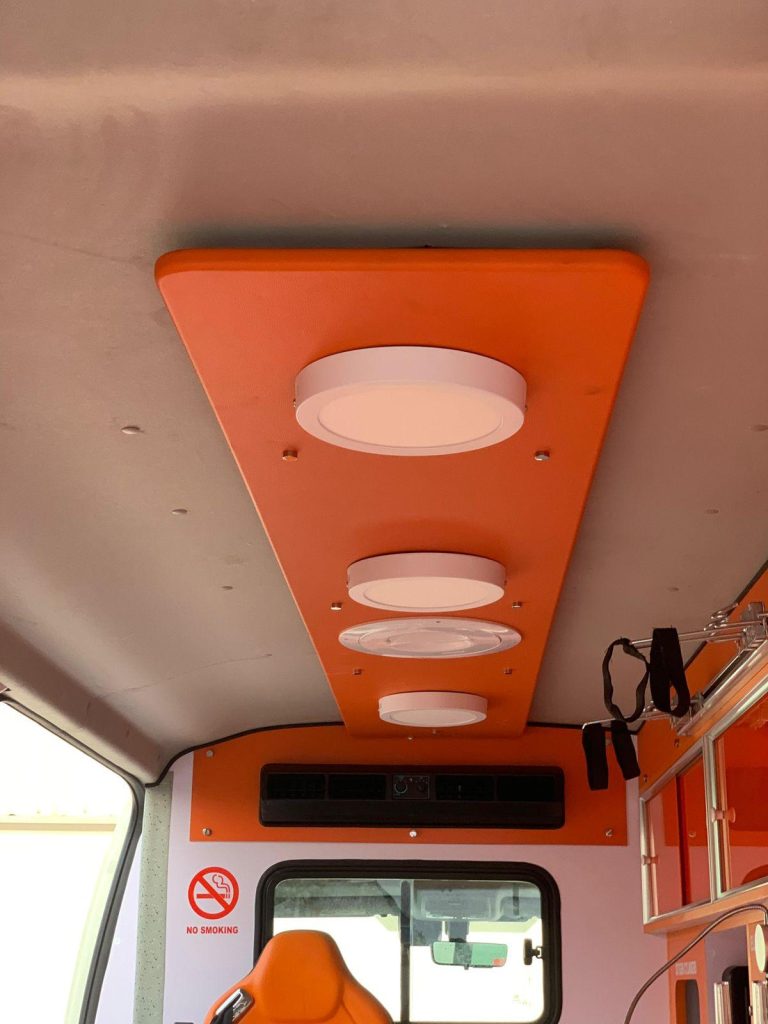
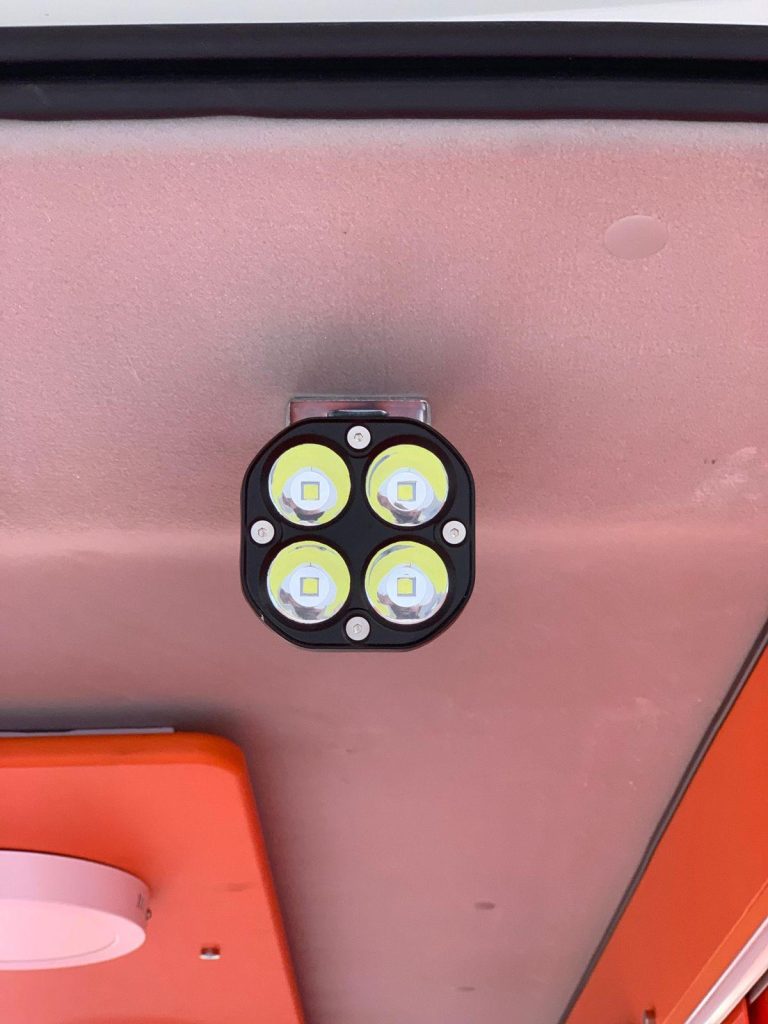
- Lighting: Bright LED treatment lights plus dimmable night operation lights.
7. Climate Control and Ventilation
Patient comfort and equipment reliability depend on stable interior temperatures.
- Independent HVAC Unit: Roof-mounted, separate from the driver’s A/C.
- Air Filtration: HEPA-grade filters to reduce airborne contaminants.
- Ventilation Fans: Maintain fresh air circulation.
This is an important element in the Toyota Hiace ambulance specifications, especially in hot or humid regions.
8. Storage Solutions
Efficient storage keeps the interior organized and safe.
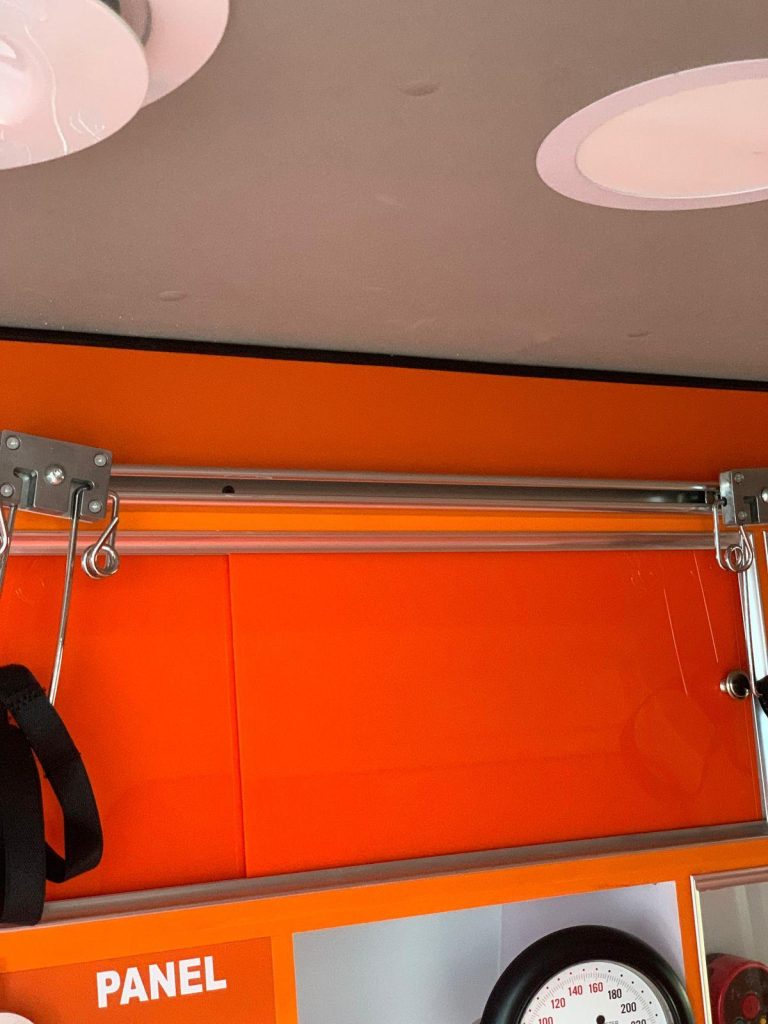
- Overhead Lockers: For lightweight medical supplies.
- Side Cabinets: For immobilization gear, trauma kits, and blankets.
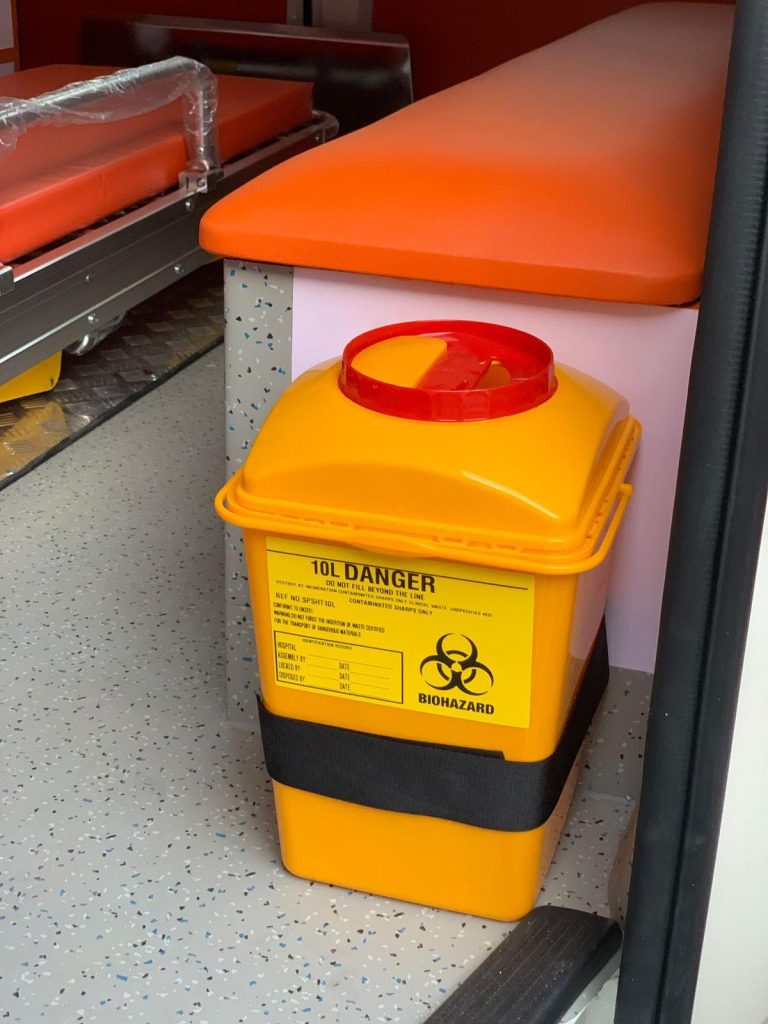
- Under-Seat Compartments: For spare oxygen cylinders and tools.
The modular nature of the Toyota Hiace ambulance layout means storage can be adapted for specific missions.
9. Safety and Compliance Features
The Toyota Hiace ambulance interior specifications are designed to meet or exceed international ambulance safety standards.
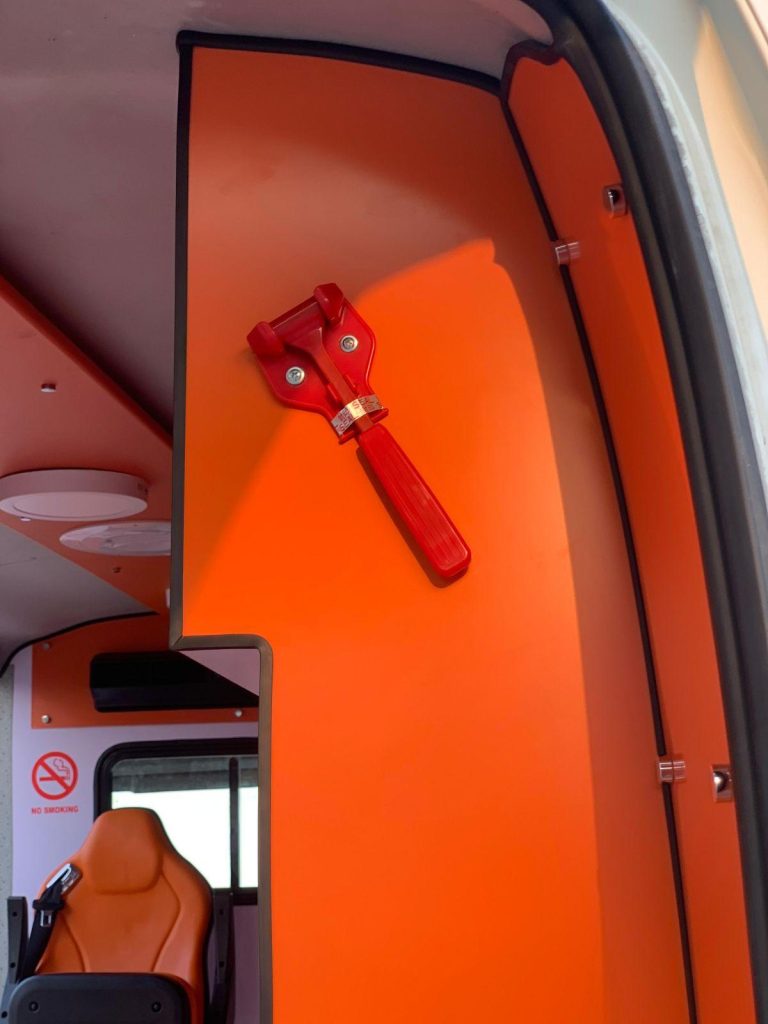
- Crash-Tested Fixtures: Securely bolted to structural points.
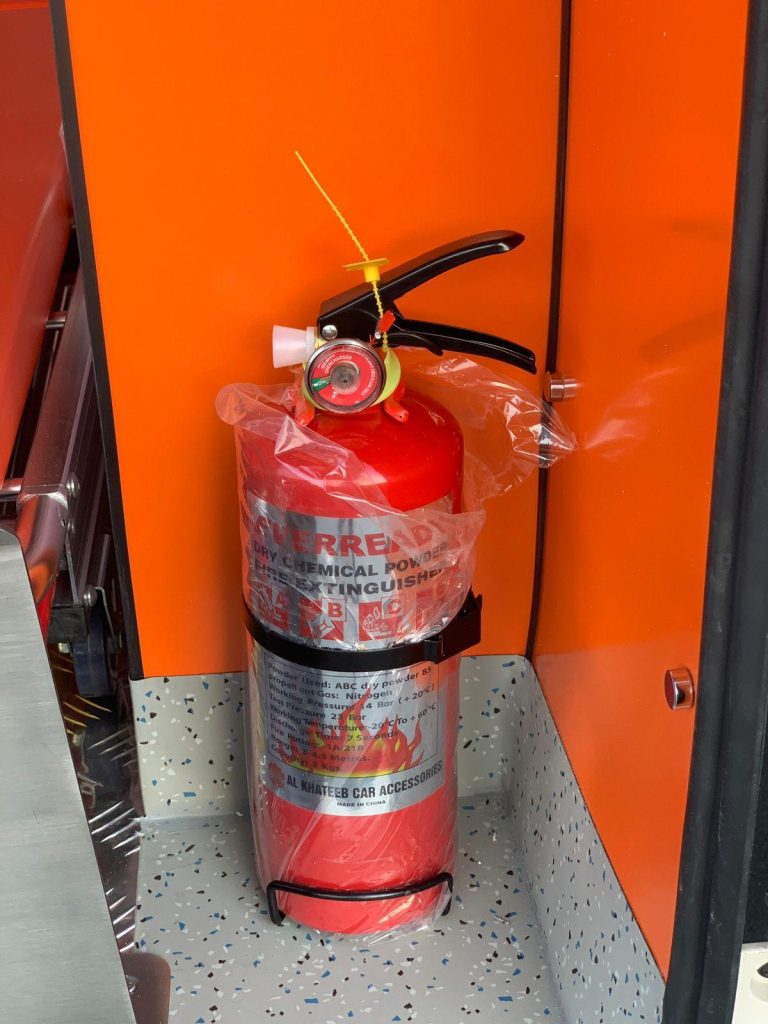
- Fire Safety: Built-in or manual fire extinguishers.
- Anti-Slip Surfaces: Flooring and steps treated for extra grip.
10. Customization Options
The Hiace platform can be adapted for:
- Basic Life Support (BLS): For non-critical patient transfers.
- Advanced Life Support (ALS): Includes ventilators, cardiac monitors, and advanced airway tools.
- Specialized Conversions: Neonatal incubator units, bariatric transport, or mobile ICU setups.
Conclusion
The Toyota Hiace ambulance interior specifications demonstrate a perfect balance between practicality, safety, and customization. From its spacious stretcher bay and secure seating to its dual power systems and hygienic materials, every aspect is engineered to support efficient emergency care. Whether used in urban, rural, or cross-country settings, the Hiace remains one of the most adaptable and reliable ambulance platforms in the world.