
Introduction
When planning an ambulance procurement, most buyers focus on the siren, the paint scheme, and the medical equipment list. However, experienced fleet managers know that the single most consequential decision—the one that affects clinical care quality for the next decade—is the roof height.
The choice between a standard roof and a high roof Toyota Hiace ambulance determines how your medics work, what equipment they can carry, and even which patients you can safely transport. This comparison moves beyond simple dimensions to examine the operational consequences of each configuration.
What Does “Roof Height” Mean in an Ambulance?
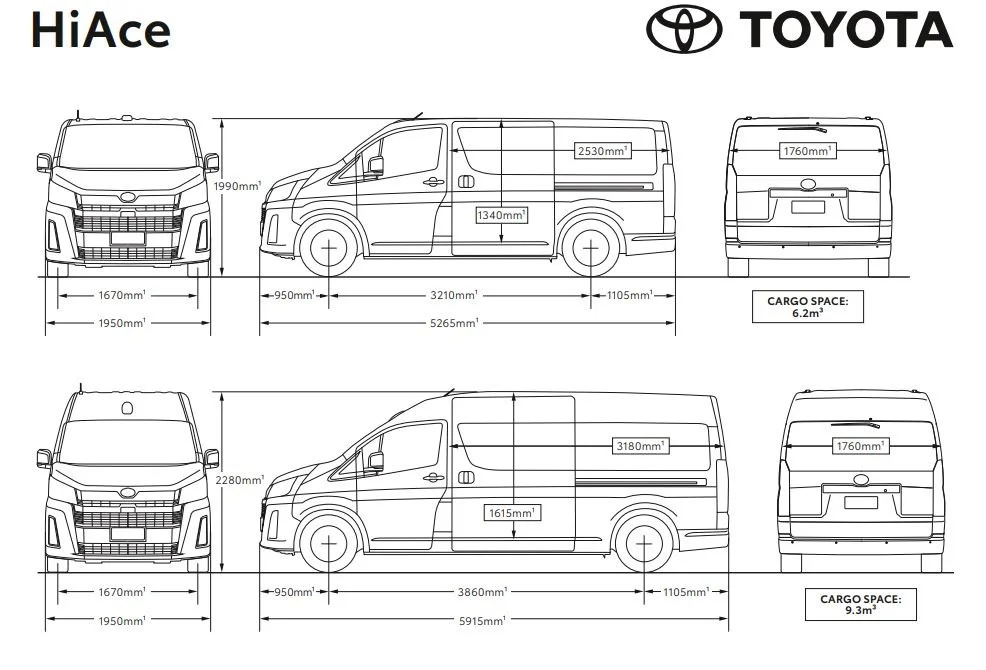
In ambulance terminology, “roof height” refers specifically to the interior standing height of the patient compartment. This is the vertical space available from the floor to the ceiling where medical staff work.
This is distinct from the vehicle’s overall exterior height, which affects garage clearance and fuel consumption. For clinical operations, interior height matters because it determines whether a medic can stand upright next to the stretcher or must work in a stooped position—a distinction with real consequences for patient safety and staff fatigue.
Standard Roof Toyota Hiace Ambulance Explained
The standard roof configuration retains the factory roof line of the original Hiace van. In this layout, interior height typically ranges from 120 cm to 135 cm, depending on the floor build-up and ceiling lining.
Working Limitations
A standard roof forces medical attendants to remain seated while attending to the patient or to work in a significantly bent position. This is not merely a comfort issue. Performing chest compressions, managing an airway, or inserting an IV line while stooped compromises procedural accuracy and increases the risk of musculoskeletal injury to staff over time.
Typical Use Cases
Standard roof ambulances are best suited for Basic Life Support (BLS) and non-emergency patient transport. When the patient is stable and requires only monitoring during transfer, the seated attendant position is acceptable. These vehicles excel in hospital-to-home transfers, dialysis transport, and scheduled clinic visits.
Advantages
The standard roof offers better aerodynamics, a lower center of gravity for stable handling, and lower initial conversion cost. For fleets operating exclusively in BLS roles, it remains a practical and economical choice.
High Roof Toyota Hiace Ambulance Explained
The high roof variant involves either a factory-produced raised roof or a post-conversion modification that cuts and elevates the original roof structure. Interior height typically exceeds 150 cm, with many conversions reaching 165 cm to 170 cm.
Full Standing Height Advantage
This configuration allows an average-height medic to stand upright and move freely around the patient. The clinical implications are substantial: airway management can be performed from an optimal position, chest compressions benefit from proper biomechanics, and patient monitoring is continuous rather than interrupted by postural discomfort.
ALS and ICU Suitability
For Advanced Life Support (ALS) and Mobile Intensive Care Unit (ICU) operations, the high roof is non-negotiable. These missions involve multiple interventions during transit, requiring the medic to move between the patient’s head, the equipment cabinetry, and the medication drawer without obstruction.
Equipment Capacity
The vertical space enables overhead cabinetry, which frees up floor space for additional equipment. A high roof Hiace can accommodate ceiling-mounted IV poles, monitor brackets, and oxygen outlets positioned for optimal workflow.
High Roof vs Standard Roof: Operational Comparison
Patient Care Quality
In a standard roof, the attendant’s focus is divided between the patient and the physical discomfort of their working position. In a high roof, the medic’s attention remains entirely on clinical parameters. This difference becomes critical during cardiac events or respiratory distress where every second matters.
Crew Fatigue
Consider a 45-minute emergency transfer with a critically ill patient. In a standard roof, the attending medic spends that time with their neck bent at an awkward angle and their shoulders tensed. Over a 12-hour shift with multiple calls, this cumulative fatigue reduces performance quality. High roof ambulances preserve crew energy for the next call.
Safety During Transport
When the vehicle maneuvers or brakes suddenly, a standing attendant in a high roof can maintain balance using overhead grab rails. In a standard roof, the seated attendant has limited ability to lean across the patient to perform procedures, often resulting in unstable positioning during movement.
Roof Height and Medical Equipment Compatibility
Different medical devices have different spatial requirements that interact with roof height.
Ventilators and Monitors
Transport ventilators and cardiac monitors are typically mounted on shelves or brackets at waist height in standard roofs. In high roof configurations, these can be positioned at eye level on articulating arms, improving visibility and reducing cable tangles.
Oxygen and Suction Systems
Wall-mounted oxygen outlets and suction regulators require vertical clearance for tubing connections. Standard roofs often force these connections at awkward angles, increasing the risk of dislodgement. High roofs allow straight, ergonomic connections.
Overhead Cabinetry
This is perhaps the most significant difference. Standard roof ambulances rely entirely on floor-standing cabinets and under-seat storage, consuming precious floor space. High roof conversions add locked overhead compartments for medications and disposables, keeping the patient zone clear and accessible.
IV Management
Intravenous lines require gravity flow. In standard roofs, IV bags hang low, reducing flow reliability. High roofs allow bags to hang at full height, ensuring consistent infusion rates during transport.
Cost Implications of Roof Choice
The price difference between standard and high roof ambulances reflects more than just metal and labor.
Initial Conversion Cost
High roof conversions require structural modification, reinforcement, and additional finishing materials. Factory high roof models command a premium over standard vans. This initial investment can be 15% to 25% higher than a comparable standard roof build.
Operational Value
However, the total cost of ownership must account for crew productivity and vehicle utilization. A high roof ALS ambulance can handle a wider range of missions than a standard roof BLS unit. For services that mix emergency and non-emergency calls, the flexibility justifies the premium.
Resale Implications
High roof ambulances typically retain value better in the secondary market because they appeal to a broader range of buyers, including international NGOs and private EMS operators seeking multi-role capability.
Can a Standard Roof Be Converted to High Roof?
Technically, yes. A standard roof Hiace can undergo post-production roof raising. The process involves cutting the original roof, fabricating or installing a raised section, reinforcing the structure, and refinishing the interior and exterior.
When Conversion Makes Sense
This route appeals to operators who already own standard roof vehicles and wish to upgrade them for expanded capability, or those in regions where factory high roof models are unavailable.
Important Considerations
Post-conversion roofs must meet structural integrity standards for rollover protection. The work must be performed by certified converters who understand load paths and weight distribution. Additionally, some jurisdictions require recertification or re-registration of modified vehicles. For most buyers, a factory high roof or a professionally converted vehicle from a specialist ambulance builder is preferable to a field modification.
Who Should Choose Which Roof Type?
Urban EMS Fleets
For first-response agencies handling emergency calls, the high roof is the only appropriate choice. The ability to provide ALS-level care during transport is fundamental to modern emergency medical services.
Private Ambulance Operators
If your business mix includes both emergency coverage and scheduled transfers, consider a mixed fleet. High roof units handle the critical calls; standard roof units efficiently manage routine transports. However, if budget allows, standardizing on high roof provides maximum operational flexibility.
Hospitals
For inter-facility transfers of stable patients, a standard roof may suffice. However, if your hospital accepts critically ill transfers or operates a neonatal transport service, high roof configuration is essential for incubator clearance and team mobility.
NGOs and Humanitarian Missions
Organizations operating in remote or semi-urban areas benefit from high roof configurations because they serve as mobile clinics capable of multiple roles. The ability to stand inside the vehicle during prolonged field treatments justifies the additional cost.
Frequently Asked Questions
Is a high roof mandatory for ALS ambulances?
Yes, for practical clinical purposes. ALS procedures such as intubation, defibrillation, and advanced cardiac life support require the attendant to work in an upright position. A standard roof forces seated or stooped positions that compromise procedure quality and increase crew fatigue.
Can ICU equipment fit in a standard roof Hiace?
ICU equipment can physically fit, but the working environment becomes unsafe. Transport incubators, multiple infusion pumps, and ventilators require significant vertical clearance for proper mounting and operation. The limited headroom in a standard roof prevents ergonomic access to the patient surrounded by this equipment.
Does a high roof affect fuel consumption?
Yes, marginally. The increased frontal area and weight of a high roof conversion result in slightly higher fuel consumption compared to a standard roof. However, the difference is typically 5% to 8% and is offset by the expanded clinical capability and crew comfort during operations.
Is roof conversion road-legal in all countries?
Roof conversion legality varies by jurisdiction. Most countries permit professional conversions that meet structural safety standards, but the vehicle must typically be recertified. Buyers should verify local regulations regarding modified vehicles and ensure their converter provides documentation of compliance.
What is the minimum interior height for an ALS ambulance?
Industry best practice recommends a minimum interior height of 150 cm for ALS operations. This accommodates the average medic standing upright and allows for equipment mounting without head strikes. Higher clearances of 160 cm to 170 cm are preferred for extended reach and comfort.